
A World Apart
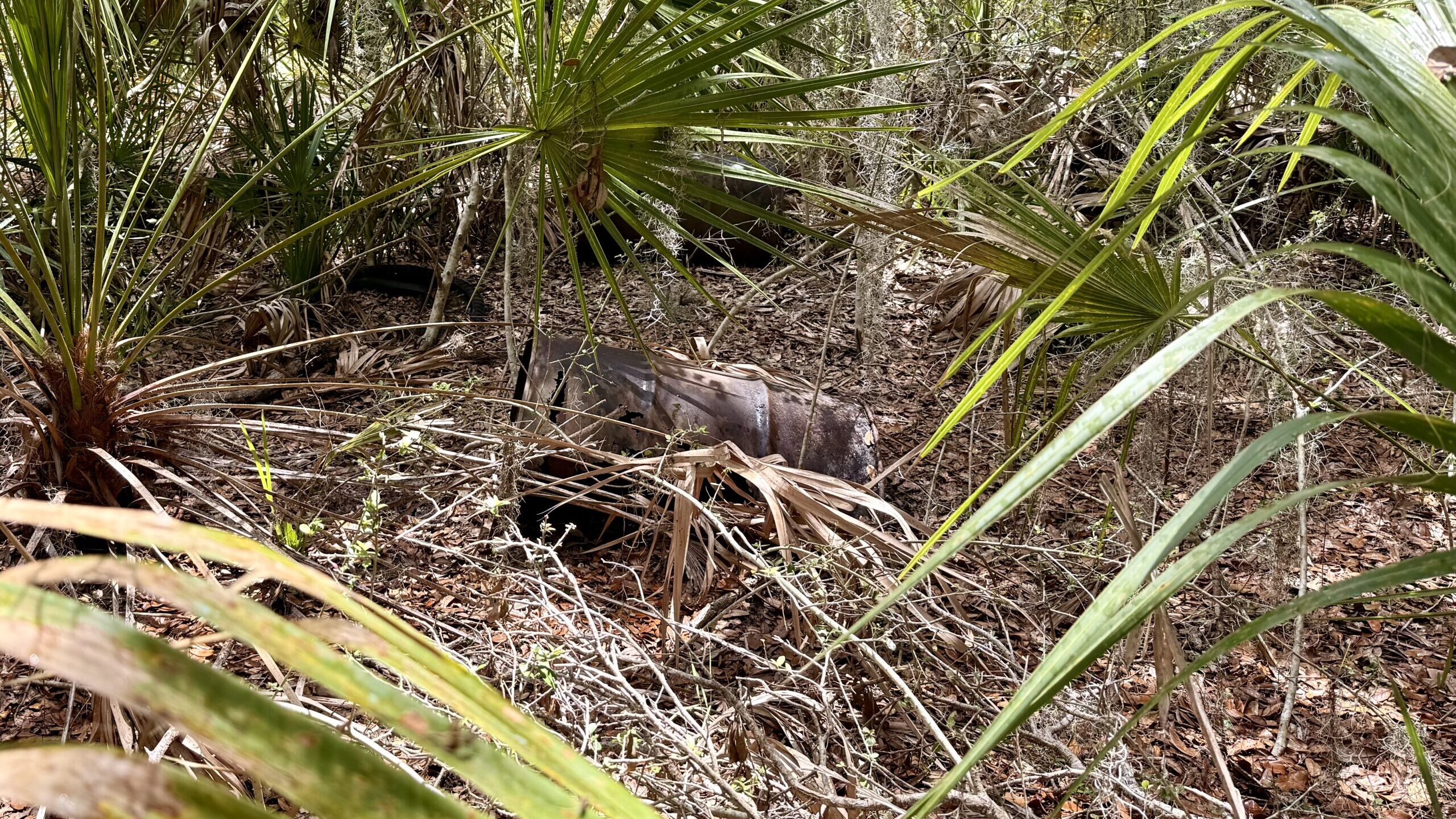
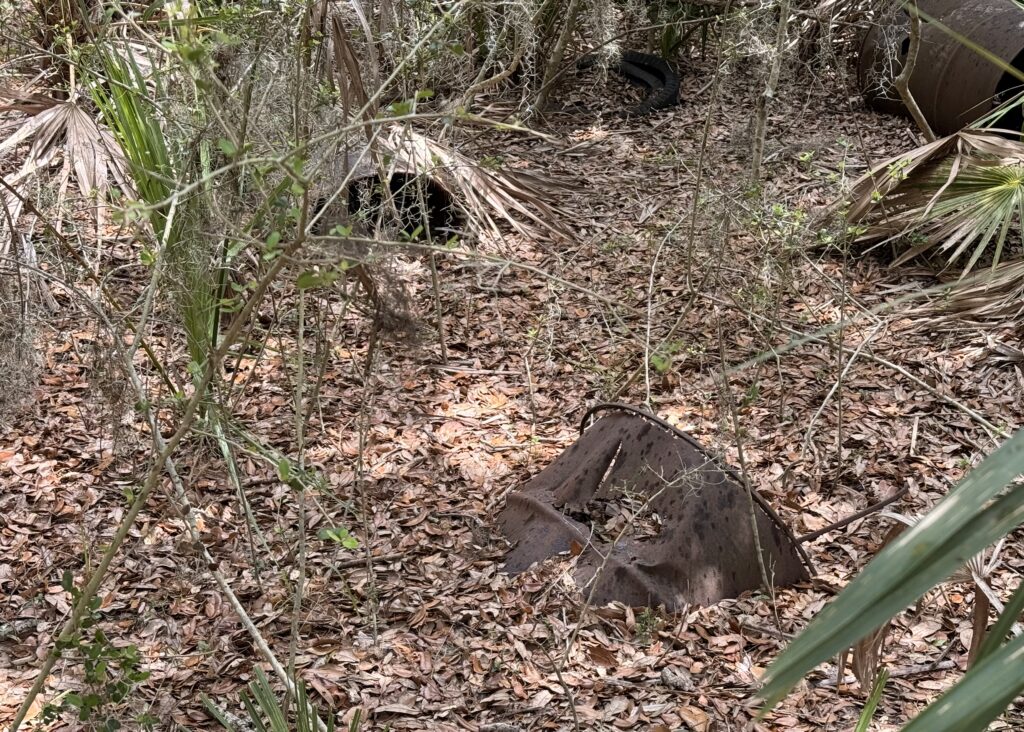
Members of the Dataw Historic Foundation recently rediscovered the remains of a 1950’s still, raided decades ago by Sheriff McTeer on Dataw’s Oak Island, South Carolina. The axe marks on the oil drums are a rare reminder of a vanished way of life. Though the smoke has long gone, the story of St. Helena’s moonshiners remains an important part of the island’s heritage, a testament to the ingenuity, hardship, and determination of its people.
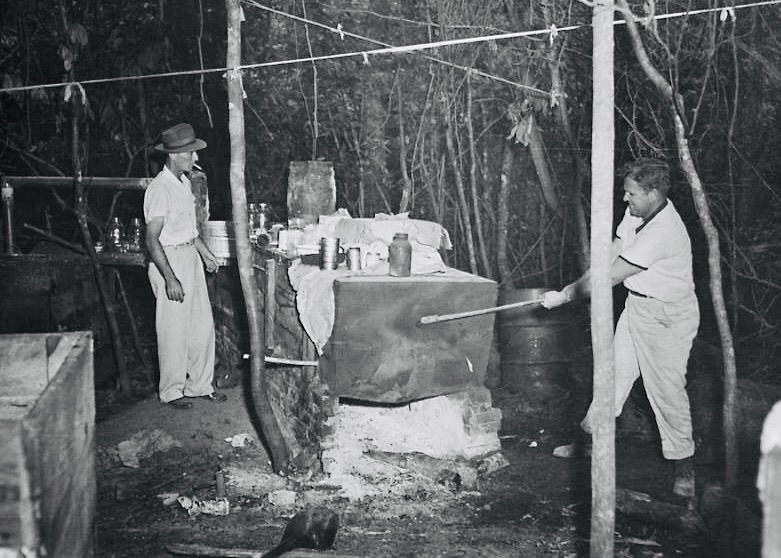
St. Helena Island and its neighboring Beaufort County sea islands stayed geographically and culturally isolated well into the twentieth century — home to thousands of Gullah-speaking families, descendants of the enslaved Sea Island cotton workers who became landowning farmers after the Civil War. You could really only reach the islands by boat until bridges finally connected them to the mainland in the 1920s and ’30s, and that isolation cut both ways: it kept these communities close-knit and distinct, but it also made the islands nearly impossible for county and federal authorities to police — ideal ground, as it turned out, for running a still, a pattern that played out across the wider Lowcountry as well.
A State That Couldn’t Make Up Its Mind
South Carolina’s relationship with liquor was, to put it mildly, complicated. Governor Benjamin Tillman’s 1892 Dispensary system tried to make the state itself the only legal liquor seller, but corruption and violent resistance brought the whole thing down by 1907. A handful of counties held onto their local dispensaries a little longer, until a 1915 statewide vote banned alcohol outright — a full five years before the rest of the country caught up with national Prohibition in 1920 under the 18th Amendment. Illicit distilling really took off across South Carolina in that gap between 1915, when the state went dry, and 1933, when national Prohibition ended. And even after repeal, South Carolina kept some of the steepest liquor taxes in the country — around four dollars a gallon — which meant there was still good money in running an illegal still well into the mid-century.
Poverty Made the Case for Moonshine
On St. Helena, moonshining wasn’t just about defying the law — it was about getting by. The phosphate industry had collapsed in the 1880s, a brutal hurricane hit in 1893, cotton kept failing in one bad stretch after another (1903, 1905–07, 1910–11, 1915–16), and a second major hurricane struck in 1911. By the time the Depression rolled around, St. Helena was among the poorest places in the entire country. For families with almost no cash income, distilling corn liquor for local sale was a risky but real way to supplement the household — echoing, on a smaller scale, the much bigger moonshine trade over in Berkeley County’s Hell Hole Swamp, which reportedly supplied whiskey as far as Charleston and Savannah, and even, by some accounts, Al Capone’s Chicago organization.
The Sheriff and the Root Doctor
No account of moonshining on St. Helena is complete without Stephney Robinson, better known as “Dr. Buzzard” (1885–1947), the island’s most famous root doctor. His courtroom “root chewing” reportedly rattled witnesses and juries badly enough that defendants — bootleggers included — kept walking free. Robinson ran his practice, cash only, from a twenty-acre spread called “The Oaks,” drew clients from all over the country, and, by family tradition, had inherited his gift from a father who’d been brought to the island as an enslaved man from West Africa.
McTeer tried more than once to prosecute Robinson for practicing medicine without a license, and the cases kept falling apart — most memorably when his own star witness convulsed and collapsed right there on the stand. Eventually McTeer took a different tack: he began studying rootwork himself and built up a rival reputation as a “doctor” in his own right. The turning point came after Robinson’s only son drowned driving off a causeway. Islanders widely believed McTeer had something to do with it, and Robinson — perhaps reading the writing on the wall — called a truce, giving up “medicine” but not his conjuring work. According to journalist Baynard Woods, that moment set off a wave of confessions and voluntary still tear-downs, with islanders reportedly warning each other, “Don’t do to me what you did to Dr. Buzzard.”
So When Did It All Wind Down?
There’s no single clean ending to this story — no last raid or final confession that closes the book on still-making on St. Helena. The wave of confessions that followed the McTeer–Dr. Buzzard truce probably happened sometime before Robinson’s death in 1947, but enforcement clearly carried on past that point — the 1938 Savannah River raid, for instance, predates the truce entirely, and South Carolina’s steep post-repeal liquor taxes kept illegal distilling worthwhile for years afterward. The most honest answer is that it faded out gradually through the 1930s and ’40s, worn down by better bridge access to the mainland, softening demand after repeal in 1933, and the social pressure that followed the showdown between the sheriff and the root doctor.
Thanks to the Palmetto Past Finders, made up of DHF members Pete Bongiovanni, Tom Morefield, Bill Riski, and Joe Roney, for their research and perseverance on this one. Tom was the real leader in finding the still. Must have something to do with his background.
Where Readers can Learn More
If you want to go deeper, start with the Beaufort District Collection at the Beaufort County Library (311 Scott Street, Beaufort, SC; 843-255-6468; bdc@bcgov.net). It holds the three-volume J.E. McTeer Scrapbooks (1926–1980, available only as bound photocopies), a vertical file on illicit distilling, McTeer’s certificates of office, and microfilmed runs of the Beaufort Gazette (1907–2015) and Island Packet (1970–2015) that are great for tracking down specific raids.
For published sources, look for McTeer’s own books, High Sheriff of the Low Country (1970) and Fifty Years as a Low Country Witch Doctor (1976); Baynard Woods’s Coffin Point (2010); Pierre McGowan’s Gullah Mailman (2000); and Rowland and Wise’s The History of Beaufort County, South Carolina, Vol. 3 (2015), which covers McTeer’s Prohibition-era enforcement work on page 271.
Sources used:
Beaufort District Collection, “Bootlegging and the Dispensary: Illicit Distilling in Beaufort, SC and Beyond,” https://bdcbcl.wordpress.com/2019/08/15/bootlegging-and-the-dispensary-illicit-distilling-in-beaufort-sc-and-beyond/
South Carolina Encyclopedia, “White Lightning,” https://www.scencyclopedia.org/sce/entries/white-lightning/
VinePair, “The Story Behind the Moonshine Still Al Capone Bought for a Bootlegger,” https://vinepair.com/booze-news/al-capone-moonshine-still-discovered/
National Register of Historic Places Nomination Form (National Park Service), https://npgallery.nps.gov/NRHP/GetAsset/NRHP/64500565_text
Bourbon Women Association, “Bourbon Women South Carolina,” https://bourbonwomen.org/bourbon-women-south-carolina/
Journal of Southern History, review via Project MUSE, https://muse.jhu.edu/article/647331/summary
Beaufort County Sheriff’s Office, “History,” https://bcso.net/our-agency/history/
Beaufort District Collection, “James Edwin McTeer, Jr. (1903–1979),” https://bdcbcl.wordpress.com/2011/08/18/james-edwin-mcteer-jr-1903-1979/
Knowitall.org, “Raid on Moonshine Still,” South Carolina History Slide Collection, https://www.knowitall.org/photo/raid-moonshine-still-history-sc-slide-collection
South Carolina Encyclopedia, “Dr. Buzzard,” https://www.scencyclopedia.org/sce/entries/dr-buzzard/
The State, https://www.thestate.com/living/article56831243.html
Wikipedia, “Stephen Robinson (root doctor),” https://en.wikipedia.org/wiki/Stephen_Robinson_(root_doctor)
Island Packet, https://www.islandpacket.com/entertainment/article33641925.html